
Hydraulic elevators are a type of elevator that uses a piston and cylinder system to lift the elevator cab. An electric motor pumps hydraulic oil into the cylinder, which moves the piston and smoothly raises the elevator.

Types of Hydraulic Elevators:

  1. Hydraulic Goods Lift: Designed for transporting heavy goods and materials
  2. Hydraulic Passenger Lifts: Suitable for transporting people in various settings

Key Features:

– Smooth operation: Hydraulic elevators provide a smooth and quiet ride

– Reliable performance: Suitable for heavy-duty applications

– Variety of options: Available in different capacities and configurations to suit specific needs

Hydraulic elevators are a popular choice for various applications, including commercial and industrial settings, due to their reliability and smooth operation.
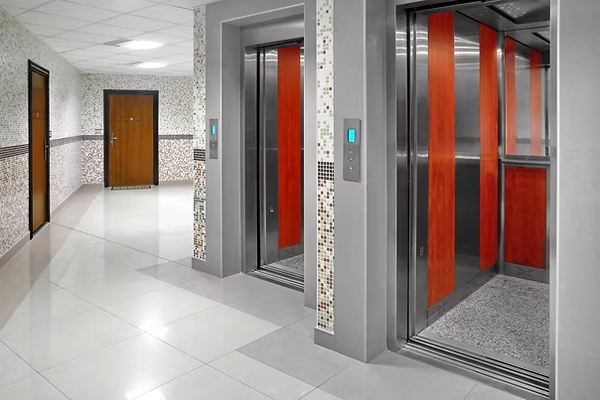
pasenger_lift

An elevator system is a complex network of components that work together to transport people or goods between floors in a building. It typically includes:

  1. Elevator car: The compartment that carries passengers or goods.
  2. Shaft: The vertical passage through which the elevator car moves.
  3. Guide rails: Tracks that guide the elevator car along the shaft.
  4. Cables or ropes: Used to lift and lower the elevator car.
  5. Counterweight: A weight that balances the elevator car’s weight.
  6. Motor: Powers the elevator’s movement.
  7. Control system: Regulates the elevator’s operation, including speed, direction, and door control.

Elevator systems can be categorized into different types, such as:

  1. Traction elevators: Use cables and counterweights.
  2. Hydraulic elevators: Use fluid pressure.
  3. Machine room-less (MRL) elevators: More compact and energy-efficient.
  4. Pneumatic Vacuum Lift

Modern elevator systems often feature advanced technologies like:

  1. Destination control systems: Optimize traffic flow.
  2. Smart elevators: Integrate with building management systems.
  3. Energy-efficient designs: Reduce power consumption.


Elevator systems play a crucial role in modern buildings, providing safe and efficient transportation for occupants.